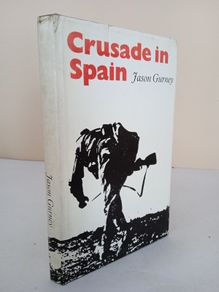
Crusade in Spain by Jason Gurney (PT224)
- Seller:
-
Knowledge is Power
Top Seller

- Feedback:
- Location:
- 1060 more ads from this seller
- Entered/Renewed:
- 1 week ago
- Ad Views:
- 234


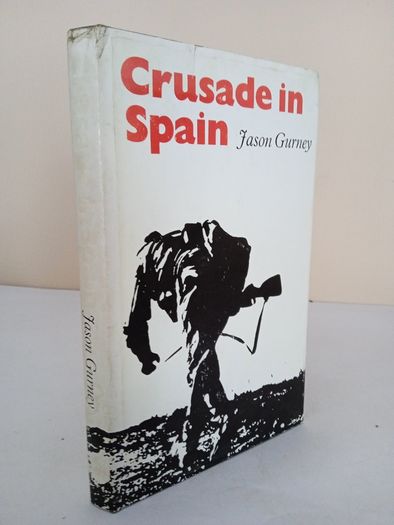
Crusade in Spain by Jason Gurney (PT224)
Description
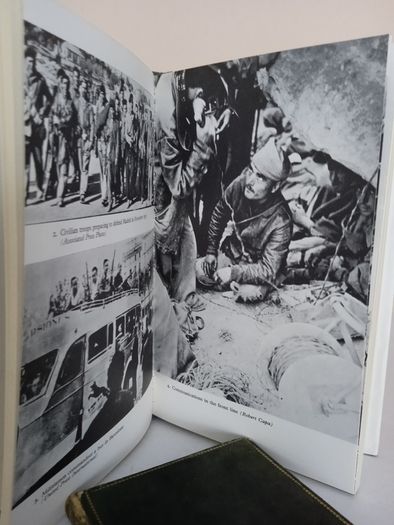
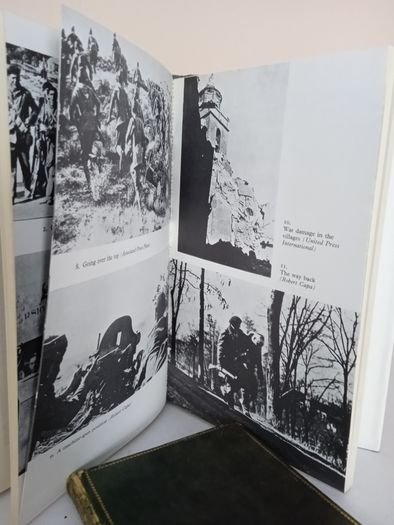
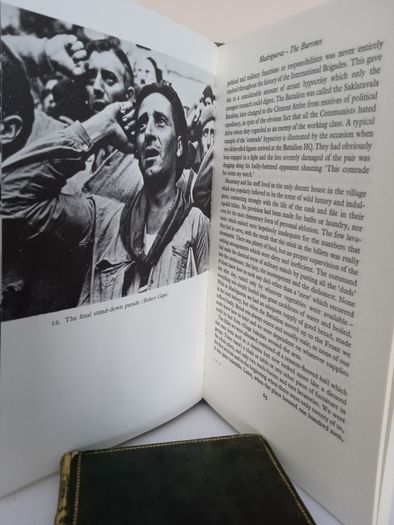
Published 1976: Hardcover / Very Good Condition / Illustrated throughout
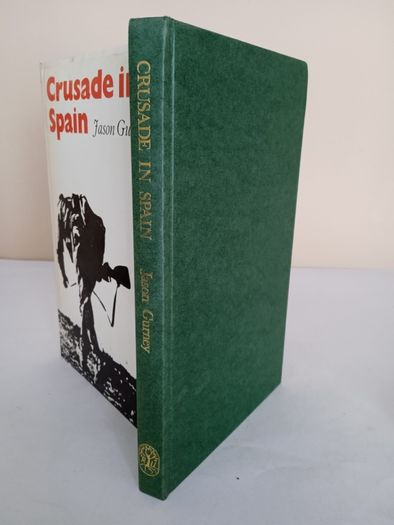
Original green cloth with gilt titles on the spine and original pictorial dust jacket. 189 + very clean and bright pages, mild speckled top edge. Slight shelf wear on the dust jacket and slightly rubbed with time consistent with age. Scarce! (PT224)
Postage €6.95 including any additional books ordered
An Post prepaid postage envelopes within the Republic of Ireland, with no weight restrictions from €6.95
Reviews:
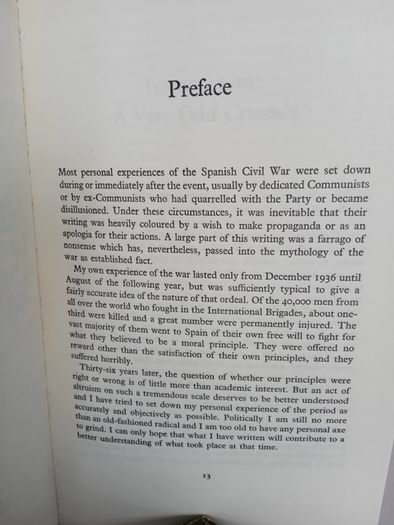
Crusade in Spain is both a personal account of Jason Gurney's enlistment with the International Brigades and his fight against Fascism in the Spanish Civil War, and a remarkably lucid description of the political forces that gave rise to the conflict and the day-to-day hardships and horrors of combat. Gurney describes his Bohemian life as a sculptor in Chelsea, and the political idealism that essentially compelled him to join the fight to save the Republic, but he also describes, in vivid detail, what is like to be a soldier on the front. Spoiler: It was horrible.
I really enjoyed this book. There may not be that many good accounts of the Spanish Civil War, as Orwell noted, but this is surely one of them.
Jason Gurney was born in 1910. As a young man in Sheringham he heard a soap-box orator who introduced him to the world of socialism: "He then progressed to a William Morris type of idealist Socialism, where all men would be equal and happy. There was an ample sufficiency of all the good things of life, if only people would find the good will to an even and just system of distribution."
As a teenager Gurney read News from Nowhere (William Morris), The Conquest of Bread and Factories (Peter Kropotkin) and The Communist Manifesto (Karl Marx). When he told his parents that he was a socialist they went mad: "My aberration was ascribed to various causes ranging from adolescence, through innate vice, to the fact that my grandfather had been an artist, that I was partly French and that I had a Jewish great-grandmother."
His family moved to South Africa and after leaving school he found work in Johannesburg. He explains in his autobiography: "The Depression years in South Africa had been extremely hard. Eventually I had the good fortune to find employment in the Norwegian whaling fleet and had saved up enough money to come to Europe.
Gurney settled in Paris and studied under the sculptor Ossip Zadkine. He then moved to London and worked under Frank Dobson. Living in Chelsea he obtained a good living as a sculptor: "I honestly don't know how good a sculptor I was. I have no doubt that I produced at least three important pieces. I was a good craftsman in wood or stone but never achieved the delicacy of touch which I sought as a modeller."
Gurney also took a keen interest in politics. As he recalled in his memoirs: "Politically speaking, I saw things in simple, radical terms. I hated the poverty and wretched conditions of life at one end of the King's Road and the callous indifference of the rich around Sloane Square."
During the Great Depression Gurney experienced a very divided society in London: "I lived in Chelsea and vaguely saw it as the microcosm of English life. Beyond the World's End pub was a slum area where the working class lived in conditions of great poverty and despair. A high percentage were unemployed and even the ones who did have jobs received such pathetic wages that they were barely richer than those without." However, Gurney refused to join the "utterly discredited" Labour Party or the "tremendously bureaucratic" Communist Party of Great Britain.
Gurney became concerned at the growth of fascism in Italy and Germany. He became an active opponent of Oswald Mosley and his British Union of Fascists. "I had seen the hatred and violence, with the resulting pattern of fear it introduced into the lives of ordinary men, and I hated the whole thing. People were becoming increasingly irrational in their attitudes as they became increasingly powerless to arrest the drift towards potential civil war. My attitude may be hard to believe today, but we had seen what had happened in Germany. There, too, people had laughed off Hitler and the Nazi Party until they had found themselves overwhelmed by the situation and the Nazis had become the masters of the German state. Fascism was strengthening its hand in every country in Europe and those who felt strongly about it, and took no action to stop it, experienced a very real sense of guilt."
In December 1936 Gurney decided to fight for the Republicans in the Spanish Civil War: "The Spanish Civil War seemed to provide the chance for a single individual to take a positive and effective stand on an issue which appeared to be absolutely clear. Either you were opposed to the growth of Fascism and went out to fight against it, or you acquiesced in its crimes and were guilty of permitting its growth. There were many people who claimed that it was a foreign quarrel and that nobody other than Spaniards should involve themselves in it, but for myself and many others like me it was a war of principle, and principles do not have national boundaries. By fighting against Fascism in Spain we would be fighting against it in our own country, and every other.... Too many people were talking too much and I felt that the time had come when any decent man must either put up or shut up." Google Books.
 To be arranged PaypalBank transferTo be arranged
Asking Price: €10  No swaps
More Similar Ads

See more in our Biographies category available today