The Woman in White by Wilkie Collins, 1860 (AB504)
- Seller:
-
Knowledge is Power
Top Seller

- Feedback:
- Location:
- 1081 more ads from this seller
- Entered/Renewed:
- 1 week ago
- Ad Views:
- 185


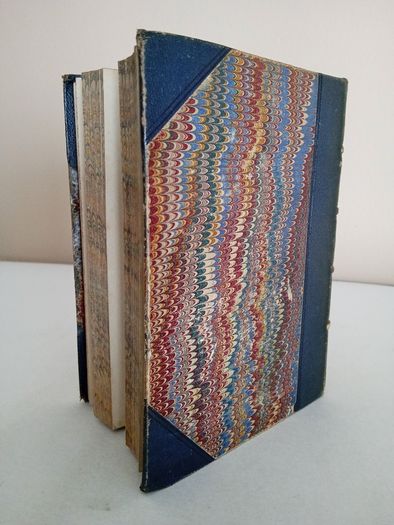
The Woman in White by Wilkie Collins, 1860 (AB504)
Description
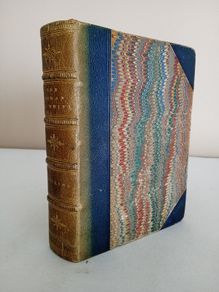
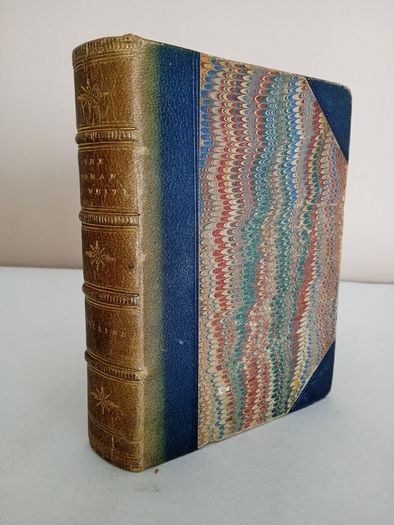
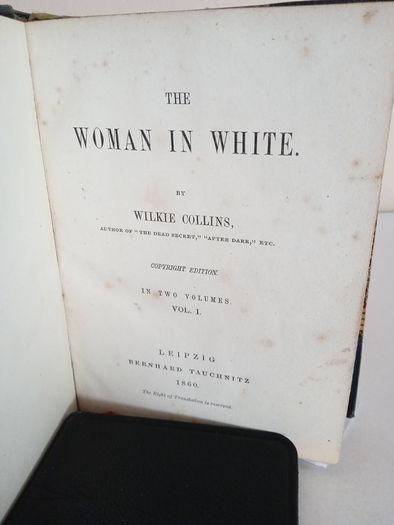
Published 1860: First Edition / Hardcover / Very Good Condition / Two Volumes in One
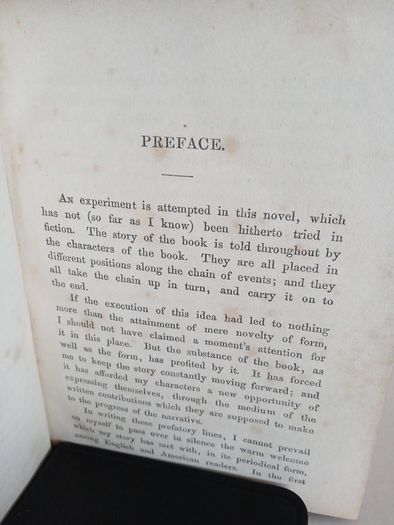
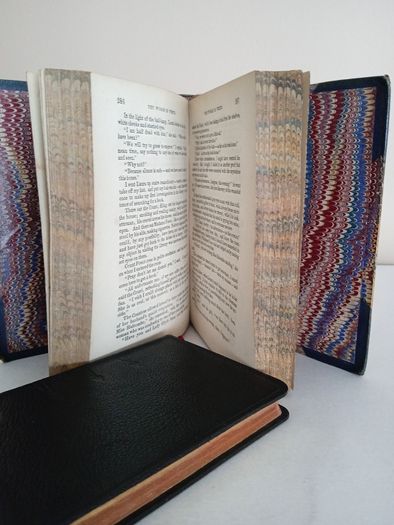
Original half leather over marbled boards with gilt ribbed titles and decoration on the spine. 324 very clean and bright slightly age-toned pages, fore-edge decoration all round, decorated endpapers, first free page opposite the title page appears to be missing, mild speckled foxing on the first few pages. Boards slightly rubbed with time and bumped on the corners consistent with age. Overall a well preserved and totally original clean and firm first edition. Scarce! (AB504)
Postage €6.95 including any additional books ordered.
An Post prepaid postage envelopes within the Republic of Ireland, with no weight restrictions from €6.95
The First Bernhard Tauchnitz Edition, Published the Same Year as the First London Edition, 1860 —It was printed in Leipzig, Germany, concurrently with or immediately following the initial English publication, serving travellers across continental Europe.
'In one moment, every drop of blood in my body was brought to a stop... There, as if it had that moment sprung out of the earth, stood the figure of a solitary Woman, dressed from head to foot in white'
The Woman in White famously opens with Walter Hartright's eerie encounter on a moonlit London road. Engaged as a drawing master to the beautiful Laura Fairlie, Walter becomes embroiled in the sinister intrigues of Sir Percival Glyde and his 'charming' friend Count Fosco, who has a taste for white mice, vanilla bonbons, and poison. Pursuing questions of identity and insanity along the paths and corridors of English country houses and the madhouse, The Woman in White is the first and most influential of the Victorian genre that combined Gothic horror with psychological realism.
Wilkie Collins was an English novelist and playwright, best known for The Woman in White (1860), an early sensation novel, and The Moonstone (1868), a pioneering work of detective fiction. Born to landscape painter William Collins and Harriet Geddes, he spent part of his childhood in Italy and France, learning both languages. Initially working as a tea merchant, he later studied law, though he never practiced. His literary career began with Antonina (1850), and a meeting with Charles Dickens in 1851 proved pivotal. The two became close friends and collaborators, with Collins contributing to Dickens' journals and co-writing dramatic works.
Collins' success peaked in the 1860s with novels that combined suspense with social critique, including No Name (1862), Armadale (1864), and The Moonstone, which established key elements of the modern detective story. His personal life was unconventional—he openly opposed marriage and lived with Caroline Graves and her daughter for much of his life, while also maintaining a separate relationship with Martha Rudd, with whom he had three children.
Plagued by gout, Collins became addicted to laudanum, which affected both his health and later works. Despite declining quality in his writing, he remained a respected figure, mentoring younger authors and advocating for writers' rights. He died in 1889 and was buried in Kensal Green Cemetery. His legacy endures through his influential novels, which laid the groundwork for both sensation fiction and detective literature. Google Books.
 To be arranged PaypalBank transferTo be arranged
Asking Price: €100  No swaps
More Similar Ads
See more in our Fiction category available today



![Miss Smilla's Feeling for Snow [Paperback]](https://media.adverts.ie/eyJidWNrZXQiOiJtZWRpYS5hZHNpbWcuY29tIiwia2V5IjoiY2M4ZGEzNDcxNGQxZmJmZjkwNjNhZjgzNWZkMjUyZjA3MGVlNmFmZGI4OGM3N2ZkOGEzYzU4NTYzZjY1NmRhNS5qcGciLCJvdXRwdXRGb3JtYXQiOiJqcGVnIiwiZWRpdHMiOnsicmVzaXplIjp7IndpZHRoIjoxNDgsImhlaWdodCI6MTA0fX19?signature=938b6d118b98f5fa5b2d8ec4f421321ac5717d52b03c5dbdbdccd057c222ad4b)