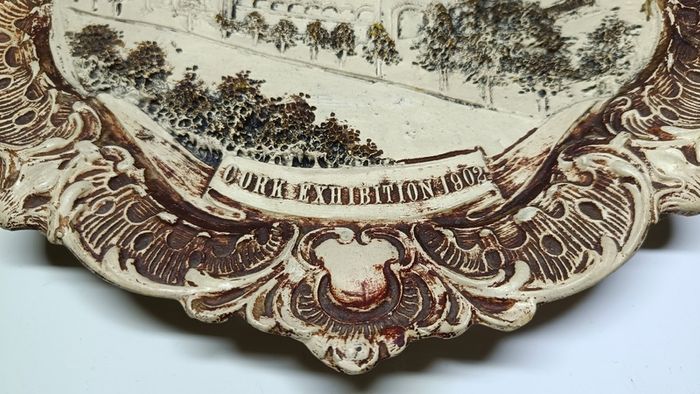
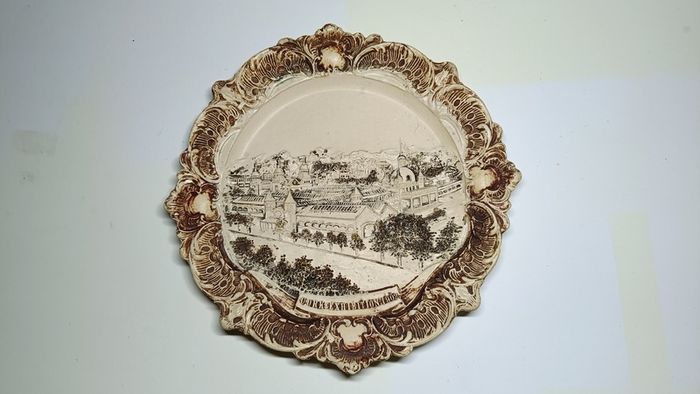
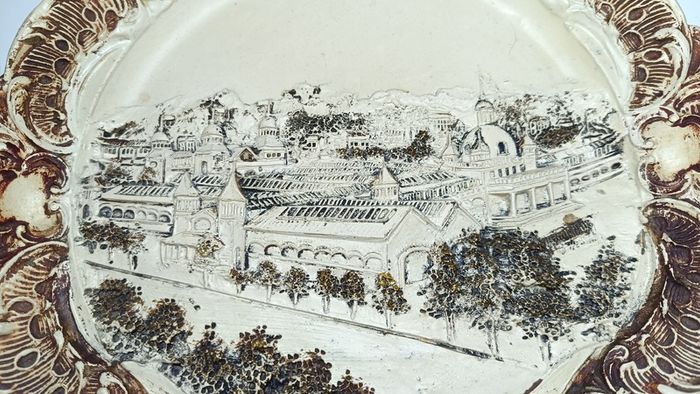
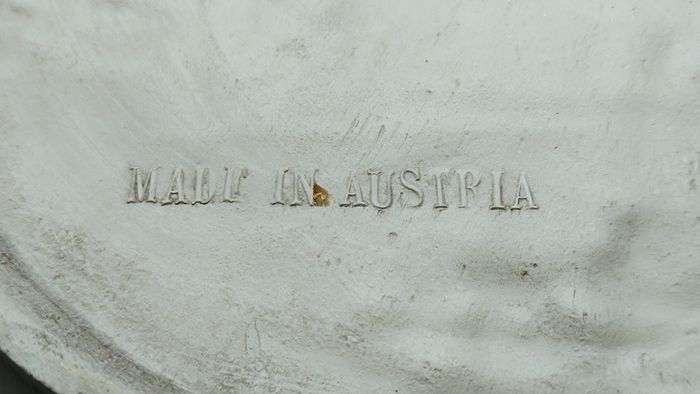
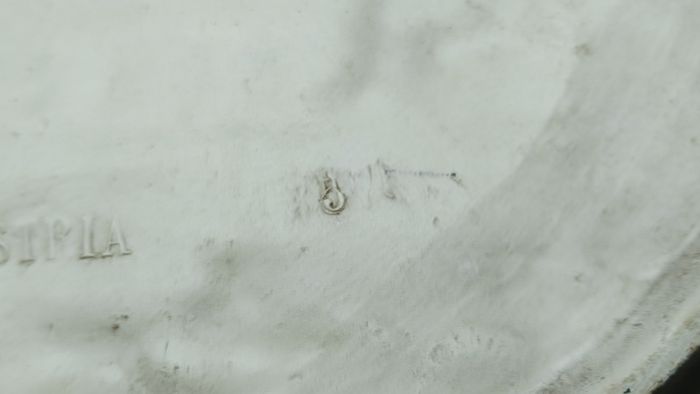
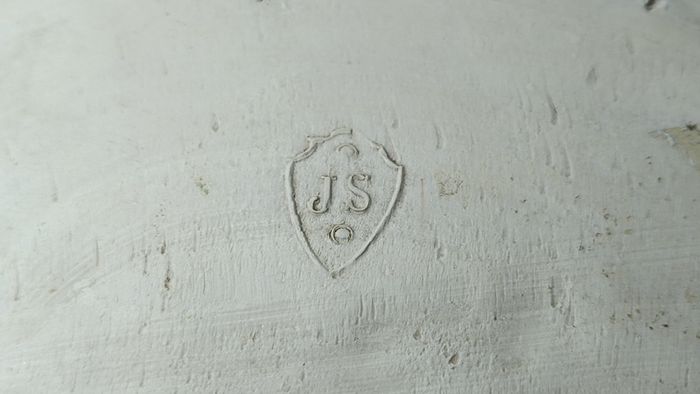
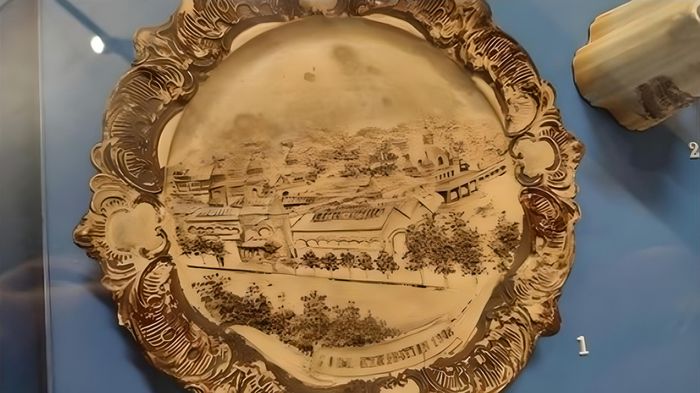
Josef Strnact Austria Majolica Ceramic Wall Plaque Antique Cork International Exhibition 1902 Commemorative Plate
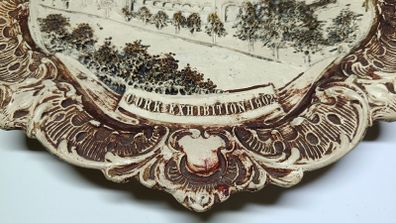
Original piece. Ultra rare and valuable piece for local collector or historian with keen interest in victorian Cork. No offers below asking price.
---------------------------
Founded by Josef Strnact junior in 1881, the terracotta, majolica and faience factory in the former Austrian town of Turn-Teplitz (located 50km south of Dresden, Germany) was an instant success because of its wide product range. It included faience and majolica vases, garden pieces like flowerpots and pillars, umbrella stands, tobacco jars, mantel clock casings and continued over weaved and open worked stoneware like baskets and flower receptacles up to terracotta wall-pictures and a series of letters, which were made of majolica and used for company signs (a system that was patented by Strnact).
Strnact opened a subsidiary in Geisingen (near Schaffhausen in Baden-Wuerttemberg) in the year 1902 which was named Terracotta-, Majolica- und Fayencefabrik Strnact Junior. To cope with the rising demand, Strnact purchased the ceramic factory of Anton Heller in Turn-Teplitz in 1909, and up to 1910 his factories there alone employed over 300 people.
In the late 1920s, Karl Zöttlein and Josef Pachmann became authorised signatories after Strnact slowly began to retire. In 1934, the complete business including the studio in Geisingen was taken over by the businessmen Mr. Elly Schubert and Josef Pachmann, but seems to have vanished shortly after that."
----------------------------------
The International Exhibition (sometimes Cork International Exhibition) was a world's fair held in Cork, Ireland, in 1902, 50 years after the first world's fair held in Ireland, which also took place in Cork. At the time of the exhibition, Ireland was still part of the United Kingdom.
Organisation
Contemporary portraits of event organisers
Edward Fitzgerald, the then Lord Mayor of Cork, originally proposed the idea for the fair which took place on 8 hectares of reclaimed marshland the Mardyke area of Cork. This area is now known as Fitzgerald's Park. The exhibition opened in spring (between April and 1 May ) and closed in autumn (September or November).
Exhibits and entertainment
Locomotive No. 36, now on display at Cork Kent station, exhibited at the 1902 exhibition
Exhibitions included a Canadian pavilion, art gallery, machinery hall and industrial hall, and Hadji Bey launched their Turkish Delight.
One of the industrial exhibits was 'Engine 36' (pictured), built by Bury, Curtis, and Kennedy in 1847, to run services from Dublin to Cork.
The Capuchin community of Cork's Holy Trinity Church organised a Father Mathew Pavilion, which included memorabilia of Mathew and wooden models of the church, and a fountain made of Portland cement.
Entertainments included a water chute, a skating rink, switchback railway, temperance restaurant, a creamery, shooting gallery and an aquarium.
Legacy
The immediate legacy was a follow on exhibition in 1903 which was visited by Edward VII and Queen Alexandra. After the second fair closed the grounds were donated to Cork Corporation for recreational use by the public and opened to the public in 1906. Now known as Fitzgerald's Park, the park retains the original pavilion and fountain from the fair and also houses the Cork Public Museum.
Source: https://en.wikipedia.org/wiki/Cork_International_Exhibition