Power Politics & Land-Early Modern Sligo

- Seller:
-
Tampa
Top Seller

- Feedback:
- Location:
- 883 more ads from this seller
- Entered/Renewed:
- 2 weeks ago
- Ad Views:
- 117


Power Politics & Land-Early Modern Sligo
Description
Condition:
New
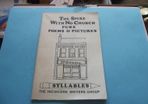
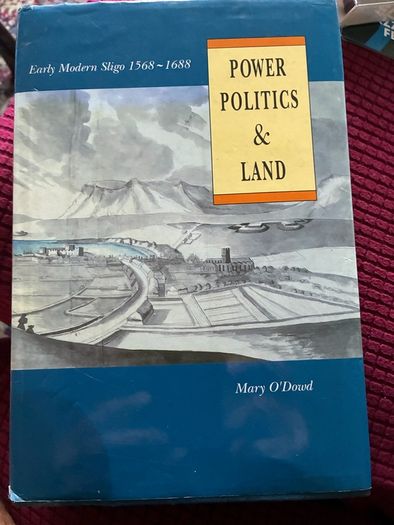
A 1991 copy of Mary O’Dowd’s book power Politics & Land, a story of early modern Sligo 1568-1688.
Published by The Institute of Irish Studies The Queen’s University of Belfast.
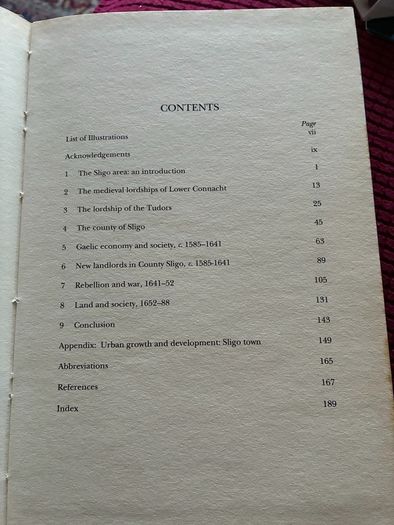
THis book is an expanded version of of the author's doctoral thesis on landownership in the Sligo area between 1585 and 1641. It is essentially a case study of the impact of the
political, social and economic changes under the Tudors and Stuarts on a specific locality. In the medieval period the area was basically the lordship of Lower Connacht, a term derived from the fourteenth-century title of the O'Connors Sligo. The superficial control originally established by the Normans, while important in defining the political contours of the region, was rather easily supplanted by this branch of the O'Connors during the Gaelic revival. Dr O'Dowd categorises their lordship as mild: they would appear to have demanded little more than military service from their sublords, who remained the essential local rulers. A harsher, more exploitative, control was imposed on the area from the late fifteenth century by the O'Donnells. This is an important factor in explaining the favourable attitude to the extension of Tudor power which is evident among the O'Connors during the reign of Elizabeth. They confidently expected that the queen would be a more accommo-
dating overlord than the O'Donnells. The introduction of Tudor rule in Sligo is presented as merely the imposition of a new form of military lordship. The author shows that the levying of the new annual land tax was seen simply as another form of the O'Donnell tribute payment. The composition collectors continued to deal in kind rather than in cash, and the seizure of cattle for non-payment differed little from the cattle-raids of the Gaelic lords. English military rule mirrored the practices and exactions of the O'Connors and O Donnells. The composition agreement of 1585 was welcomed and, it is argued, held reasonable promise of success. The failure of the government to honour the guarantees it contained, allied to the harsh military rule of the Binghams and resentment at arbitrary tax collection, are suggested as the main reasons for the blighting of these hopes. The extent of the ultimate failure is underlined by the
extensive support Hugh O'Donnell received in Sligo in 1595. While the area had been shired initially in Tudor times and sheriffs were appointed from the 1570s, it was not until the early seventeenth century that any attempt was made to introduce county civil government. While the evidence is scanty, it seems clear that progress was slow. Dr O'Dowd suggests that local government was controlled by a small group of Protestant landlords, some of whom were resident in neighbouring counties, though
she detects an increasing Old English Catholic influence from the 1620s. The chapter on Gaelic economy and society between 1585 and 1641 questions many of the glib generalisations often made about the nature of Gaelic lordships. The simplistic view of landholding as fundamentally egalitarian is shown to be illusory. There was a variety of tenancies, a diversity of landholders, and even primogeniture was used in inheritance during the medieval period. The standard picture of a society starkly divided into landowners and landless labourers is shown to differ radically from the complex and fluid situation
revealed through a painstaking study of the limited and difficult source material. An analysis of the financial situation of the native landlords in the 1630s suggests that the majority had no cash income. The increasing financial demands of the government forced many of them to sell or mortgage large portions of their estates. Sligo was not subjected to an official plantation scheme before 1641, yet major changes in landownership occurred. In 1560 neither New English nor Palesmen owned land in the area; by 1641 almost half the land there had changed hands, and the main beneficiaries were government
officals, both from England and the Pale, soldiers, merchants and the Church of Ireland.
The author is tentative in her conclusions regarding the impact of these new landlords. They appear to have made relatively few changes in farming practice, for example adopting the existing and inefficient reliance on stock grazing. The Scottish settlement beginning with migrating disillusioned Ulster settlers before 1641 and intensified by the Cromwellian
plantation is even more sketchy, yet here too the picture which emerges is one of stagnation.
Hardback.In very good condition
 Paypal
Asking Price: €30 (Price Non Negotiable)  No swaps
More Similar Ads









See more in our Memorabilia category available today