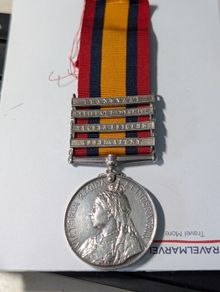
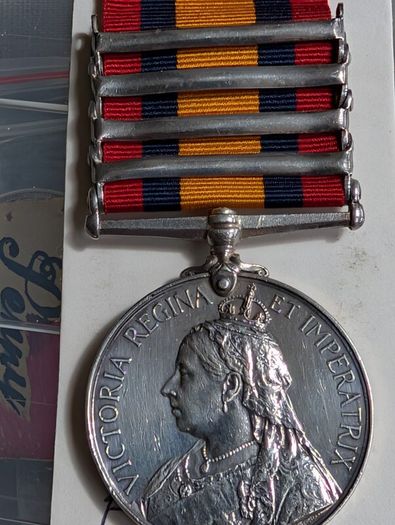
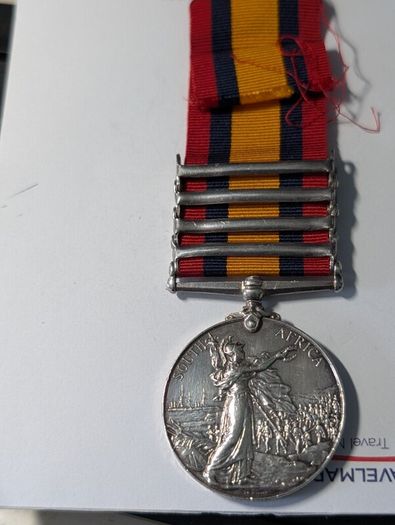
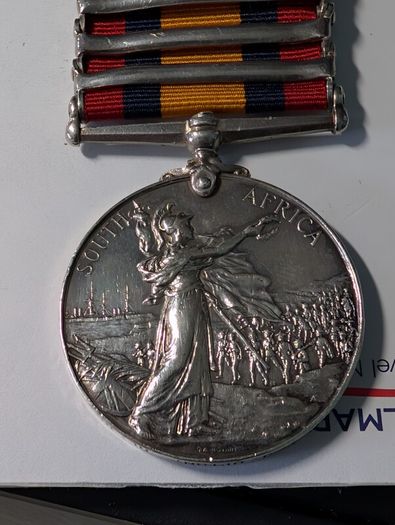
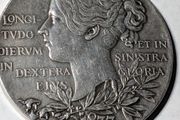
Queens SA medal Boer War.
- Seller:
-
irish.eyes1
Top Seller

- Feedback:
- Location:
- 111 more ads from this seller
- Entered/Renewed:
- 1 month ago
- Ad Views:
- 349


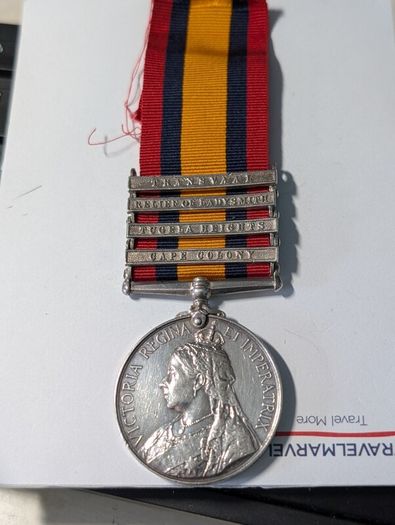
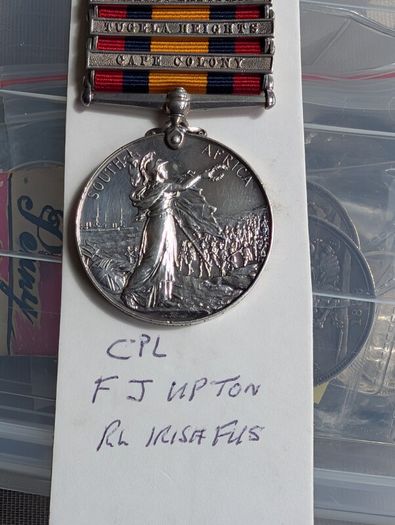
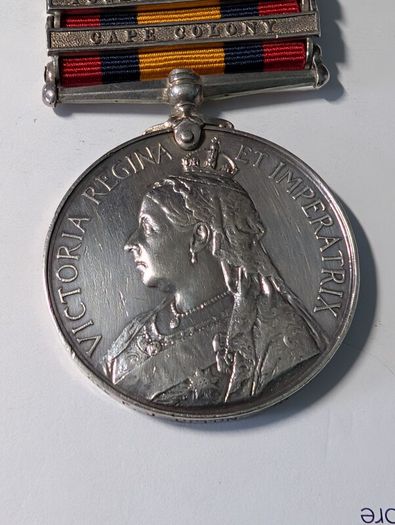
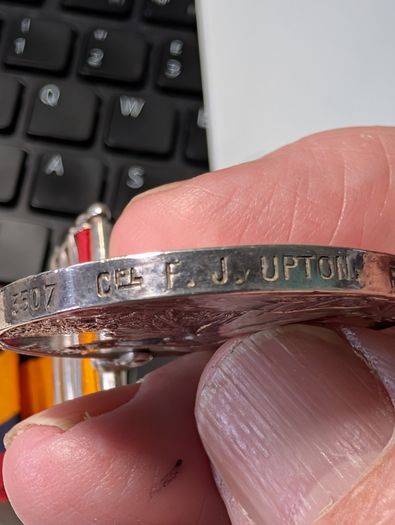
Queens SA medal Boer War.
Description
A Royal Irish Fusiliers man Fred Upton.
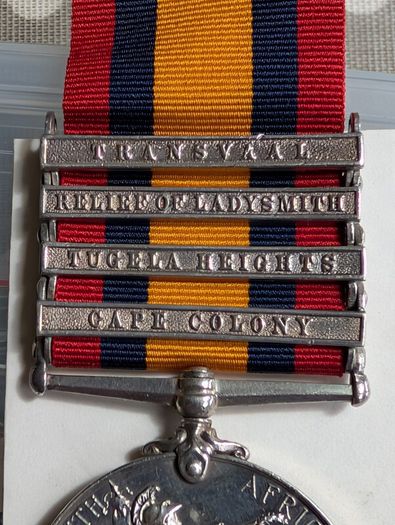
This exact clasp combination pinpoints Corporal F. J. Upton’s service to the 2nd Battalion, Royal Irish Fusiliers, who served in General Sir Redvers Buller’s Natal Field Force during the heavy fighting of late 1899 and 1900.
Clasp Breakdown & Operational Timeline
British campaign medals list clasps chronologically from the bottom up (the earliest battle clasp sits closest to the medal disc):
Cape Colony: Awarded for initial service in the Cape Colony theatre prior to or alongside the Natal operations.
Tugela Heights (14–27 February 1900): Awarded for the fierce, fortnight-long series of battles along the Tugela River (including Pieter's Hill and Wynne's Hill), where the 2nd Royal Irish Fusiliers suffered heavy casualties forcing a breakthrough across the river.
Relief of Ladysmith (15 December 1899 – 28 February 1900): Earned for participating in the relentless relief column operations that finally broke the 118-day siege of Ladysmith.
Transvaal: Awarded for subsequent mobile column operations, clearing guerrilla forces, and guarding blockhouse lines across the Transvaal state between May 1900 and May 1902.
What This Reveals About His Boer War Experience
Relief Force, Not Defending Force: Because he has Tugela Heights and Relief of Ladysmith rather than Defence of Ladysmith, he was fighting on the outside trying to break through the Boer lines to save the besieged garrison (where the 1st Battalion of his regiment was trapped inside).
Frontline Infantry Combat: The battle at Tugela Heights was among the hardest-fought infantry engagements of the entire campaign, proving he was in active combat during the most critical phases of the war in Natal.
 Post/CourierTo be arranged Bank transferTo be arranged
Asking Price: €200  No swaps
More Similar Ads
See more in our Memorabilia category available today