The Lusitania Medal
- Seller:
-
irish.eyes1
Top Seller

- Feedback:
- Location:
- 132 more ads from this seller
- Entered/Renewed:
- 3 months ago
- Ad Views:
- 225


The Lusitania Medal
Description
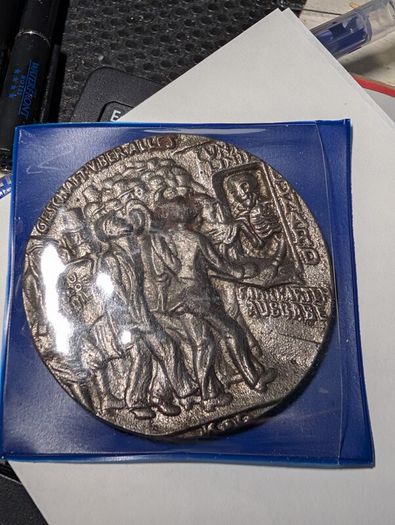
Comes in a blue plastic sleeve.
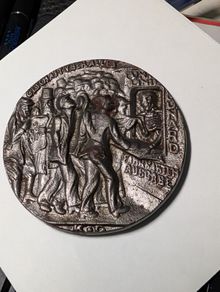
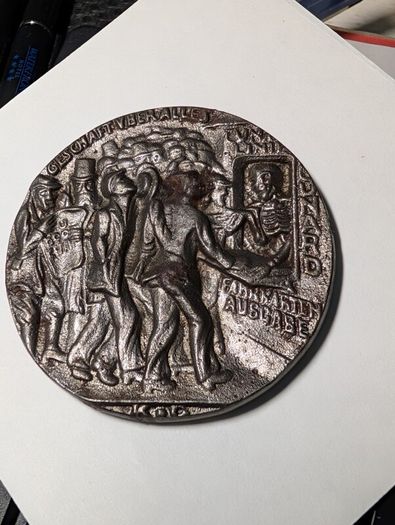
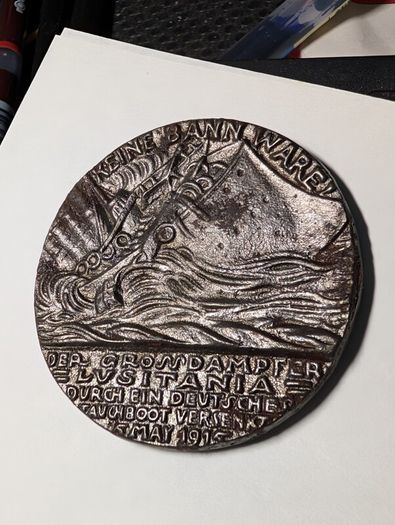
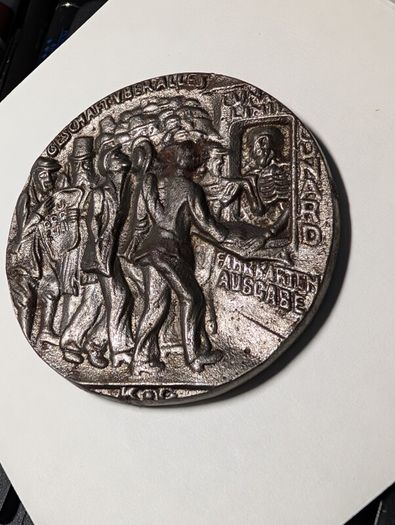
This is a famous piece of historical propaganda: the Lusitania Medal, designed by German sculptor Karl Goetz in 1915. It commemorates the sinking of the British ocean liner RMS Lusitania by a German U-boat during World War I.
While the original medal was meant as a satirical critique of the British government, it famously backfired, becoming a powerful tool for British and Allied propaganda to illustrate German "barbarism."
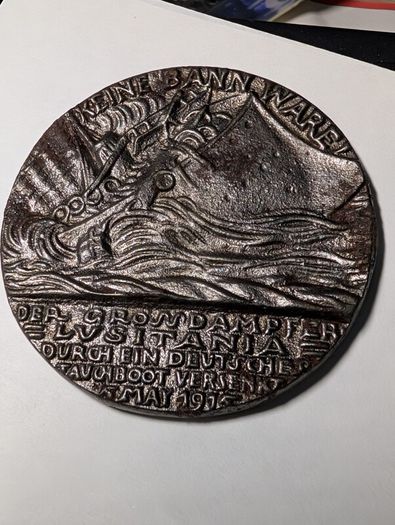
The Reverse Side (Sinking Ship)
Shows the Lusitania sinking into the ocean, laden with weapons (cannons and airplanes) on its deck.
Top Inscription: "KEINE BANNWARE" (No Contraband). This was Goetz’s argument—that the ship was a legitimate military target because it was carrying munitions.
Bottom Inscription: "DER GROSSDAMPFER LUSITANIA DURCH EIN DEUTSCHES TAUCHBOOT VERSENKT 5 MAY 1915" (The liner Lusitania sunk by a German submarine 5 May 1915).
Historical Note: Goetz made a famous error by dating the sinking to May 5th instead of the actual date, May 7th. The British seized on this error, claiming it proved the sinking was premeditated.
The Obverse Side (The Ticket Office)
Imagery: A skeleton (Death) stands behind a ticket counter for the "Cunard Line," selling tickets to a crowd of passengers.
Top Inscription: "GESCHÄFT ÜBER ALLES" (Business Above All).
Bottom Inscription: "FAHRKARTEN AUSGABE" (Ticket Office).
Meaning: This was a critique of the Cunard Line and the British government for allowing civilians to board a ship while ignoring German warnings that the waters were a war zone.
The RMS Lusitania was sunk in the Celtic Sea, off the south of Cork.
Specifically, the shipwreck lies:
Distance: Approximately 11 to 12 nautical miles (about 18–22 km) south of the Old Head of Kinsale.
Depth: It rests at a depth of roughly 93 meters (about 300 feet).
Coordinates: The exact location is 51^\circ 25' \text{N, } 8^\circ 33' \text{W}. For all you Divers .
 Post/CourierTo be arranged Bank transferTo be arranged
Asking Price: €25  No swaps
More Similar Ads



See more in our Memorabilia category available today