Oileain Arann by Martan O Domhnaill (PT133)
- Seller:
-
Knowledge is Power
Top Seller

- Feedback:
-
6354 0
- Location:
- 1269 more ads from this seller
- Entered/Renewed:
- 4 hours ago
- Ad Views:
- 30


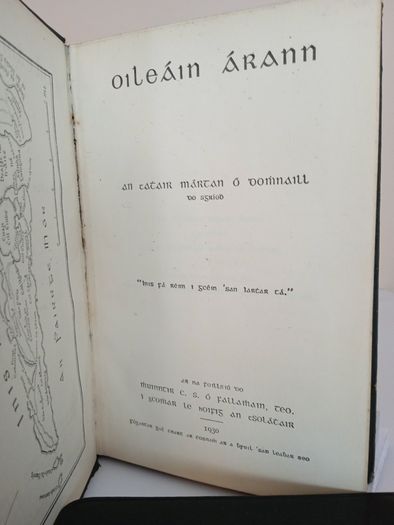
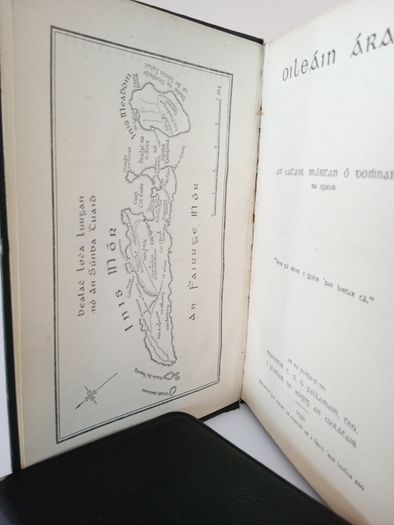
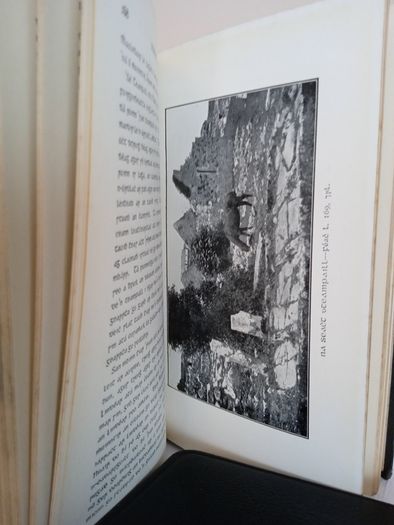
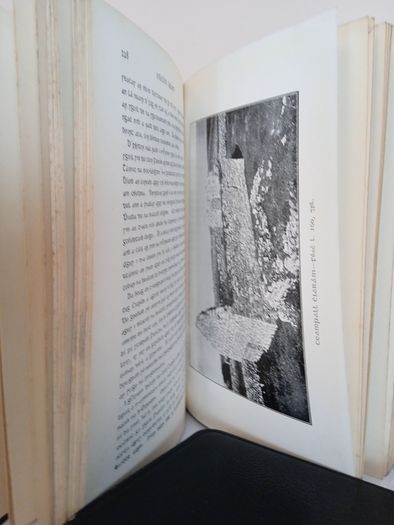
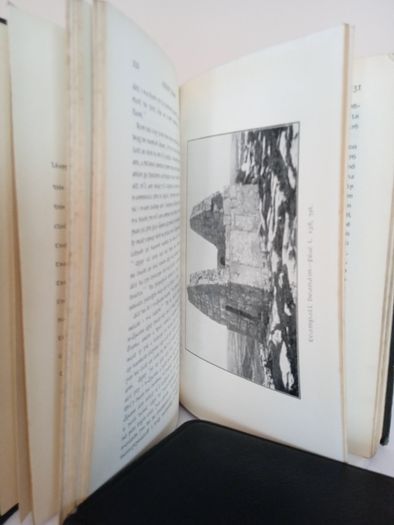
Oileain Arann by Martan O Domhnaill (PT133)
Description
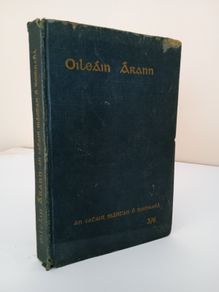
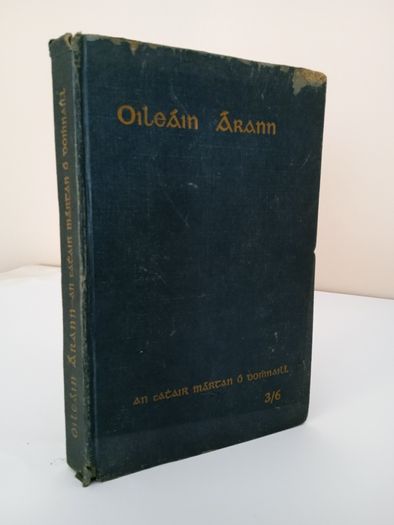
Published 1930: First Edition / Hardcover / Very Good Condition / Illustrated throughout / Irish Text
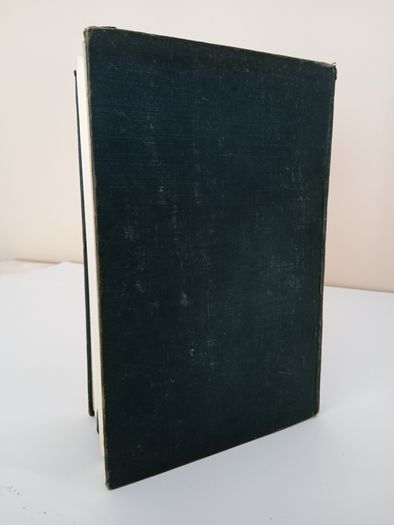
Original green cloth with gilt titles on the cover and spine. 289 very clean and bright pages, previous owners details in pencil on the first free page. Boards slightly rubbed and faded with time and chipped along the edges consistent with age but remain firm and intact. Scarce! (PT133)
Postage €4.00.
An Post prepaid postage envelopes within the Republic of Ireland, with no weight restrictions from €6.95
Oileáin Árann by Mártan Ó Domhnaill
This is the priest who wrote Oileáin Árann , 1930. He was the son of Niall Ó Domhnaill and his wife Honoria Joyce , of Mallow, Co. Mayo . Niall (1838–1927) had a shop and land. When a branch of Conradh na Gaeilge was established in Mallow on 10 July 1899 it was reported in An Claidheamh Soluis that Niall Ó Domhnaill was elected vice-president and Mártan Ó Domhnaill co-secretary. Mártan was born on 30 September 1877 and had four brothers and five sisters. It is believed that his family did not raise them with Irish.
Martin was ordained about 1904 and was an assistant priest in Spiddal , Co. Galway , 1909–10 after previously being a chaplain in Ballybarrow . From 1910 to 1914 he was professor of Irish at Coláiste Iarlatha , Tuam . He is reported in An Claidheamh Soluis of 27 April 1912 to have been one of those who gave high praise to O'Neill Lane's English-Irish dictionary . His brother Pádraig Ó Domhnaill, Newport , was a member of the committee for its publication. According to the Catholic Directory 1915 Martin was subsequently working in the parish of Kilmaine . He was an assistant priest in Arran from 1920 to 1934. This would appear to be two periods of appointment. He later worked in Clifden, Caológa, Corner Chapel, Garbally and Ballygaelach. He was chaplain to the Franciscan Monastery in Oireamh from 1961 until his death in Galway Regional Hospital on 10 March 1963.
It is said that he was often offered a parish, but that he preferred to devote himself to research and writing. But it is also said that he was strange and reserved, and had little interest in parish matters. The people of Aran, it is said, believed that it was because of these disadvantages that he was sent among them.
He translated both hymns and patriotic songs into Irish. His translation of 'Faith of our fathers' ('Cré ár sinnsear tá faoi bláth') can be found in Timirthe Chroidhe Naomhtha Íosa , September 1927. He is said to have composed the song 'Árainn i foad i céin'.
One of the last sentences in Oileáin Arann is: 'I will never forget the fair people of these islands, among whom I spent happy years. Often in the future, as in the past, my thoughts will return to these islands where my heart is. Like Columba, I would like to lie down in the fresh air of Aran'. But he was buried in Mallow, despite the fact that it is said that a priest is rarely buried in his native place.
https://www.ainm.ie/Bio.aspx?ID=327&AspxAutoDetectCookieSupport=1
 To be arranged PaypalBank transferTo be arranged
Asking Price: €8  No swaps
See more in our Non-fiction category available today