The Book of Martyrs: A History of the Persecution of the Protestants by John Foxe (GT671)
- Seller:
-
Knowledge is Power
Top Seller

- Feedback:
-
6319 0
- Location:
- 1261 more ads from this seller
- Entered/Renewed:
- 2 days ago
- Ad Views:
- 327


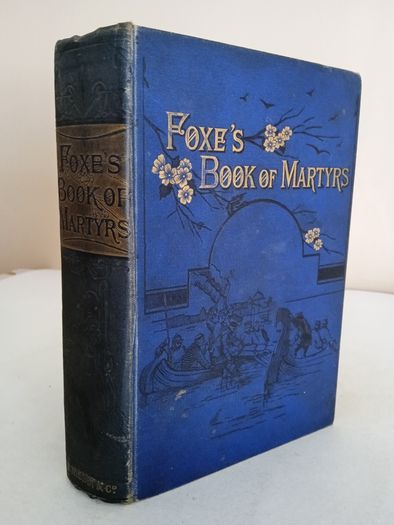
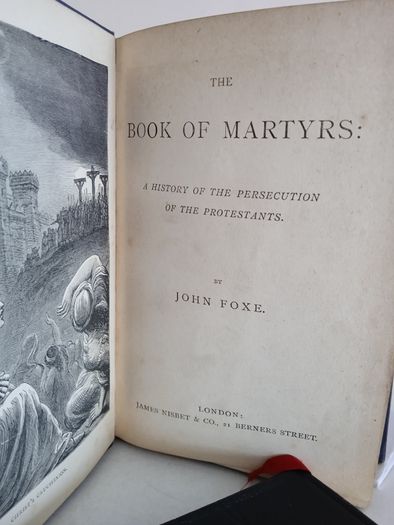
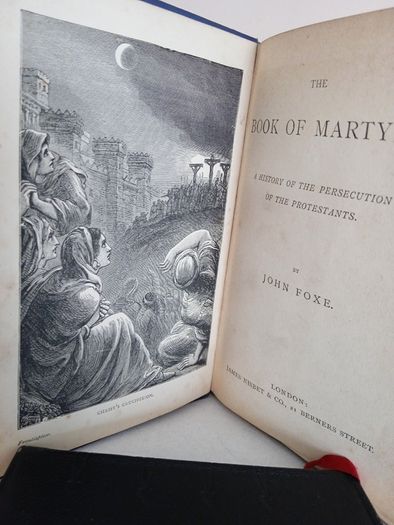
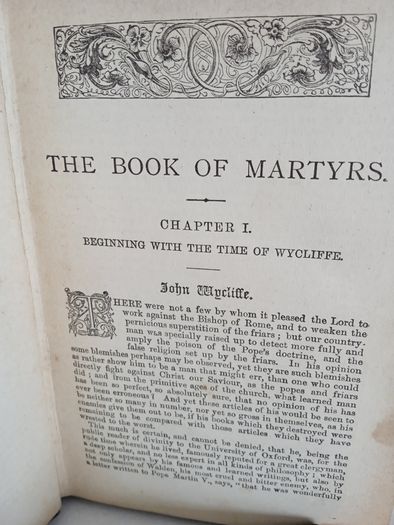
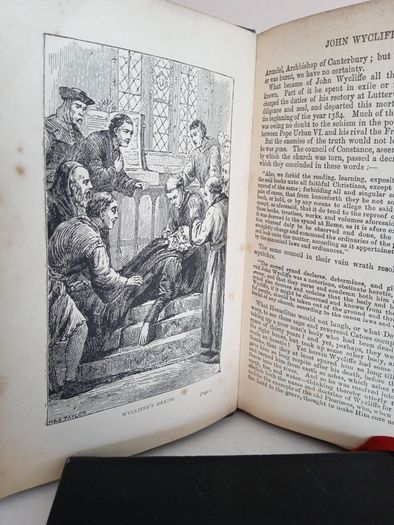
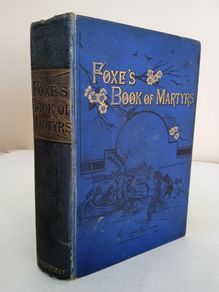
The Book of Martyrs: A History of the Persecution of the Protestants by John Foxe (GT671)
Description
Circa 1886: Hardcover / Good Condition / Illustrated throughout
Original blue embossed decorated cloth with gilt titles on the cover and spine. 390 slightly age-toned pages, speckled foxing and browning on some pages, some corners turned and a few creases with age. Boards are rubbed, faded and part stained with time and bumped on the corners consistent with age but remain firm and intact. Scarce! (GT671)
Postage €6.95 including any additional books ordered.
An Post prepaid postage envelopes within the Republic of Ireland, with no weight restrictions from €6.95.
The Times
There was never a worse place or time to be religious than Europe in the 16th Century. These were cruel times. There was the death penalty for all but the most petty offences, and hangings were a popular spectator sport. Indeed, hanging was a lenient punishment: flaying, impaling, breaking on the wheel, and being hung upside down and sawn through from groin to scalp were alternatives. Lesser crimes such as begging were punished with flogging, branding or mutilation. Torture was widespread and trials, if held at all, often a travesty of justice. Warfare, too, was conducted with the utmost brutality; massacre, rape and pillage of the civilian population were standard practice, and the slaughter of enemy prisoners was common, sometimes even including those who had been promised their lives if they surrendered.
Religious hatred made things even worse. Reading Foxe, or other authors of the time, whether Protestant or Catholic, it is striking how absolutely certain everyone was that not only were they right, but that their opponents were the agents of Satan. (See here for a Catholic example and here for a Calvinist one). Foxe knew that the Pope was the Antichrist predicted by the Bible in the same way as he knew that water was wet or that the sun went round the earth. From this certainty sprang the intolerance from which persecution arises. It was argued, that if a murderer, who only slew the body, deserved death; how much more deserving of death was a heretic, whose evil falsehoods could destroy the victim's soul. This being so, it was clear that any means could and should be used to stamp out these devil's spawn. Both sides believed that there was only one true religion and all deviation from it was hellish; they only differed about which religion it was. Catholics persecuted Protestants and vice versa; each side persecuted its own heretics with equal vigour. In Eastern Europe, the Orthodox faith was both perpetrator and victim. In England, the official religion changed four times in less than thirty years, and each change was accompanied by persecution of those who would not change with it. The division of Europe into Catholic and Protestant powers, often at war with one another, meant that in some countries (especially England) preaching the wrong religion was regarded as supporting the enemy and punished as treason.
The Book
John Foxe or Fox (1518-1587), a staunchly Protestant divine, wrote his book as this story seen from the Protestant point of view. The Acts and Monuments of the Christian Church, better known as Foxe's Book of Martyrs, was first published in English in 1563. (see Bibliographic Note). In this enormously long history of the Church from the death of Christ to the accession of Queen Elizabeth I, he is anxious to prove firstly the complete hatefulness, evil and corruption of the Catholic church, the papacy and the monastic orders, and secondly to assert the right of the monarch to appoint bishops and clergy, and to dispose of church property and income at will. Everything (and that means everything) which supports this view goes in; everything which does not is either left out, glossed over, or rejected as ipso facto untrue because asserted by his opponents. For example, his treatment of Savonarola is breathtaking in its omissions. To read Foxe's account, one would think that Savonarola was a humble monk, plucked from his cell and burned for preaching a few sermons -- there is not a word about his capture of the government of Florence, theocratic rule (with bonfires of vanities,) nor of his inciting a French army to invade Italy and occupy Florence; still less of his claims to possess miraculous powers. If his sources support his prejudices, however, his credulity knows no bounds; he is as ready to peddle the myth of Jewish blood-sacrifices of Christian children as he is to believe in the foundation of the church in England by Joseph of Arimathea. When he gets closer to his own times, however, his accounts are in most cases taken from eye-witness evidence or official documents and must be accepted as basically factual. There is no doubt that Protestants were savagely persecuted by Henry VIII and especially by Mary I and that this contributed to the fear and hatred which animates the book. The gruesome and enormously detailed accounts of the martyrdoms of Cranmer, Ridley, Latimer and all the other victims of Bloody Mary's tyranny are sober fact. Nonetheless, any students tempted to regard the book as a work of history are warned to check anything Foxe says with some more even-handed historian before reproducing it. (We recommend Reformation: Europe's House Divided by Diarmaid MacCulloch)
Influence
Foxe's Book of Martyrs was very widely read and had a deep influence on English thinking for centuries. In the Seventeenth century, it contributed to what historians have called the "Catholic myth"; that is the belief that English Catholics, in reality a powerless and beleaguered minority, were a vast conspiracy ready to seize any opportunity to overthrow the state, enslave the people, introduce the Inquisition etc. It is arguable that this belief was one of the principal causes of the English Civil War, and quite certain that it was a cause of the rebellion of Monmouth and the "Popish Plot" conspiracy, not to mention the expulsion of James II in the "Glorious Revolution". A century later, the Gordon riots of 1780 drew most of their strength from it; in the words of Dickens in Barnaby Rudge:
https://www.exclassics.com/foxe/foxintro.htm
 Post/CourierTo be arranged PaypalBank transferTo be arranged
  No swaps