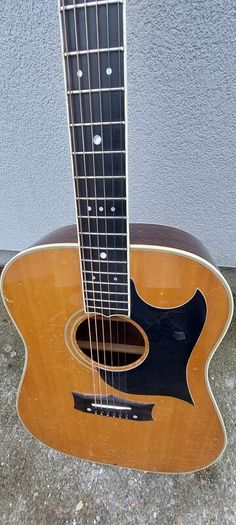
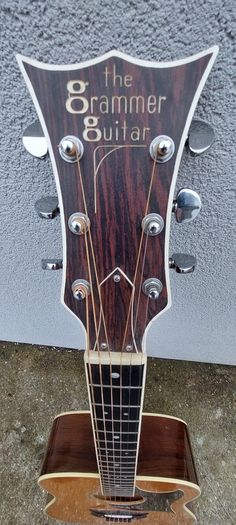
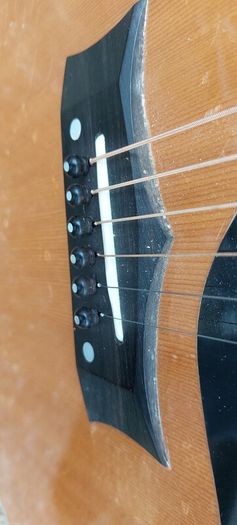
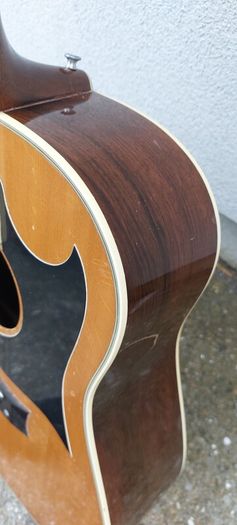
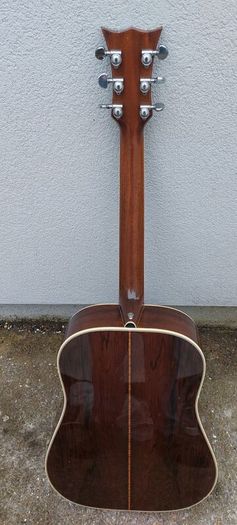
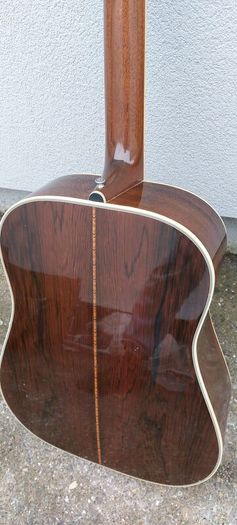
The Grammer Guitar G10. Vintage Brazilian Rosewood Acoustic Beauty. If You Know You Know.
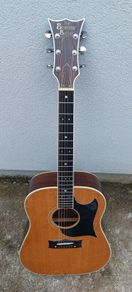
Asking price:
€2,500
Make an offer:
- Seller:
- skerdinkydaw
- Feedback:
- Location:
- 4 more ads from this seller
- Entered/Renewed:
- 2 months ago
- Ad Views:
- 1,637


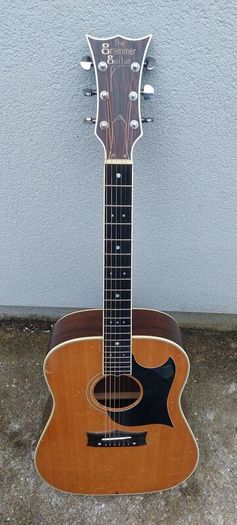
Viewing
1
of
11
The Grammer Guitar G10. Vintage Brazilian Rosewood Acoustic Beauty. If You Know You Know.
The Grammer Guitar G10. Vintage Brazilian Rosewood Acoustic Beauty. If You Know You Know.
From sellers around the web:
Comments & Offers

Just got this guitar back from a set up and it sounds incredible. Absolute bargain for a Brazilian Rosewood guitar.
@james52637: Hiya, Are you interested in viewing it? if so I'll take a good look tomorrow when it's daylight and let you know. Cheers
@james52637: here's what AI says.
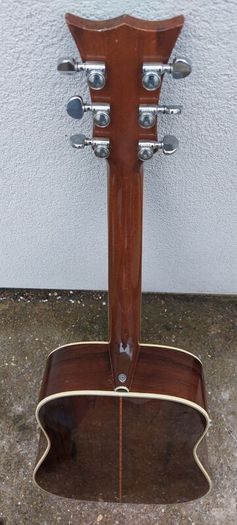
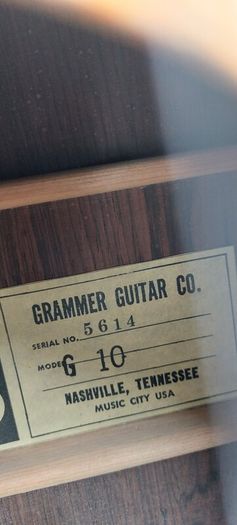
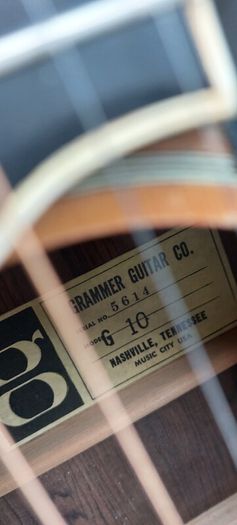
The G-10 was the signature flagship dreadnought of the Grammer line, designed with an Alpine spruce top and beautiful Brazilian Rosewood. However, because your specific guitar sits high in the 5000s serial number range, it was built toward the very end of Ampeg's ownership—likely right between 1970 and 1971, just before the company ceased operations entirely.
By the time this specific unit rolled out of the factory, Ampeg had standardly transitioned the G-10 to a laminated construction to optimize material use and combat the splitting issues that historically plagued early, thin-cut solid Brazilian Rosewood guitars.
Helpful Details About Your G-10:The "Magic" Sound: Despite having laminate back and sides, vintage collectors highly prize these late-era Ampeg Grammer guitars. The tops are still solid Alpine spruce, and the interior build quality under Ampeg was highly structured. Players frequently describe late-era G-10s as having a uniquely powerful, "boomy" projection.
Here's one just listed on Reverb from a guitar dealer in The USA. Some good info in his description. Look at the price.
https://reverb.com/item/101536298-grammer-g-10-1968-beautiful-brazilian-rosewood-g-10-it-s-a-stunning-example
https://reverb.com/item/101536298-grammer-g-10-1968-beautiful-brazilian-rosewood-g-10-it-s-a-stunning-example
About the Grammer Guitar Company:
After extensive research—and dissecting J-45s and D-18s to create an interior bracing that was a hybrid of both, he developed the first Grammer prototype in March 1965, and the company started on an $18,000 stake and was shipping soon after that. The price for the early Grammers was $395. They measured 15 1/2″ at the lower bout and 5″ deep, and the scale of the compensated neck was 24 1/2″.
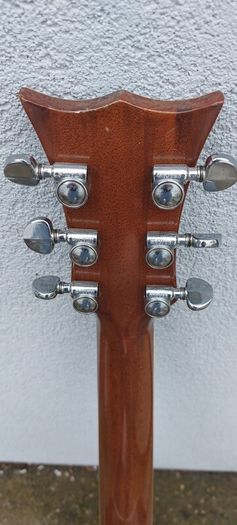
Billy Grammer valued quality and eye-appeal over profits. During the middle of his first run of guitars, he decided to redesign his instrument’s headstock, bridge, and pickguard. The new bridge had a crown shape to match the top of the headstock. Another unique detail was the inlay that ran the length of the fretboard and matched the body binding. Large and small pearl dots alternated down the ebony or rosewood fretboards, with two small dots at the 3rd, 7th, and 15th frets, and three at the 12th fret. Brazilian rosewood, flamed maple, and bird’s-eye maple were all used for the tops, with, typically, ribbon mahogany for the back and sides.
We’ve seen many Grammer’s in circulation in Nashville over the years—came in amazing colors, besides the basic natural finish with an aged tint that our example wears. These include red, purple wine, blue burst, and a green burst that is highly sought in the vintage market. Those finishes, along with a unique batwing-style pickguard, defined these guitars as instruments for the stage, and they were popular with such country stars as Porter Wagoner, Dolly Parton, Loretta Lynn, the Wilburn Brothers, Hank Locklin, and Johnny Cash. Hotshot guitarists including Merle Travis, Leon Rhodes, and the Rolling Stones’ Mick Taylor also played Grammers.
By 1968, the rising cost of materials was causing the company to sputter. Luckily, that’s when Ampeg approached Billy Grammer to buy the rights to manufacture his 6-strings. He took the deal and received royalties for each guitar sold. Ampeg pushed hard into the market, and Grammer opened up a showroom on Nashville’s lower Broadway—a stone’s throw from the Ryman Auditorium.
In April ’68, shortly after Ampeg took over, the Grammer factory burned and all the tools and records were lost. Ampeg rebuilt the shop and continued the brand, but the year after Ampeg was acquired by Magnavox-Selmer in 1971, the Grammer line was retired. Under Ampeg, the brand branched out from a single guitar style to G-10, G-20, G-30, and G-40 models, with prices rising alongside those numbers. But the biggest immediately discernable change that came with Ampeg’s ownership was the transition from a capital G to a lowercase G on the headstocks. Regardless of the size of their G’s, every Grammer guitar weve come across has been magical.

Asking Price: €2,500  No swaps
Ask Question
Make Offer
More Similar Ads
€2,400.00
€3,500.00
€1,750.00
See more in our Acoustic Guitars category available today
€249.00 

€27.95
€3,595.00
€125.00
€149.95
€375.00
€60.00
€490.00

€50.00

€8.00

€25.00

€50.00

€50.00
€650.00
€375.00

€450.00
€80.00
€300.00
€120.00

€50.00