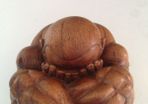
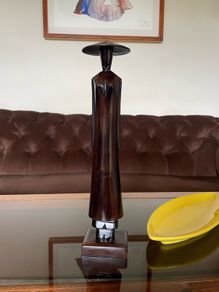
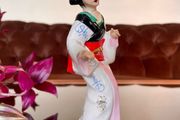
Vintage Silhouette Statue Vietnamese Woman in Ao Dai Dress
- Seller:
-
Sammler
Top Seller

- Feedback:
- Location:
- 268 more ads from this seller
- Entered/Renewed:
- 2 years ago
- Ad Views:
- 601


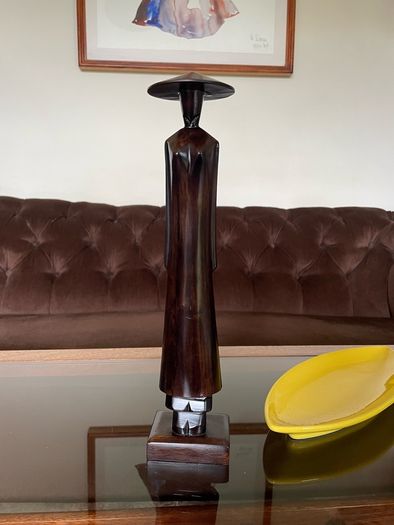
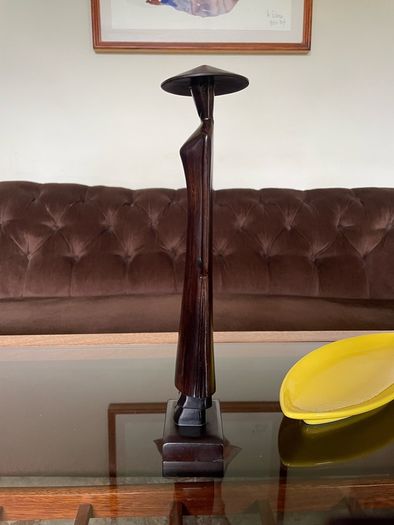
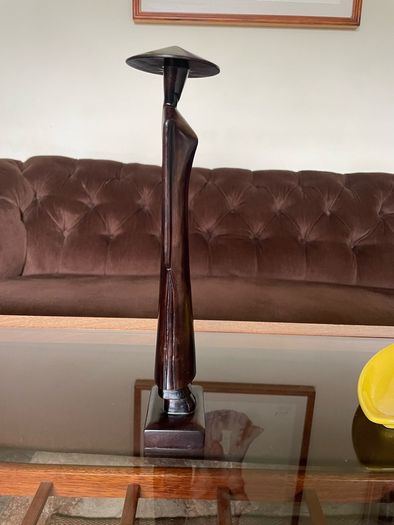
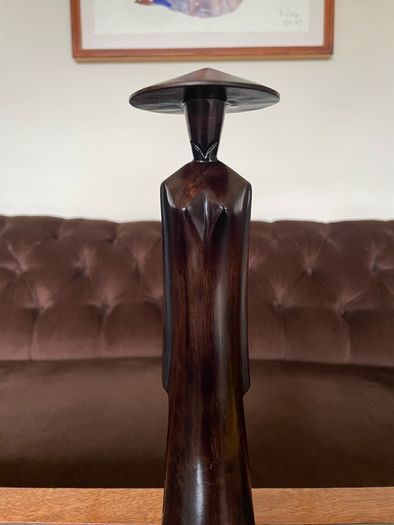
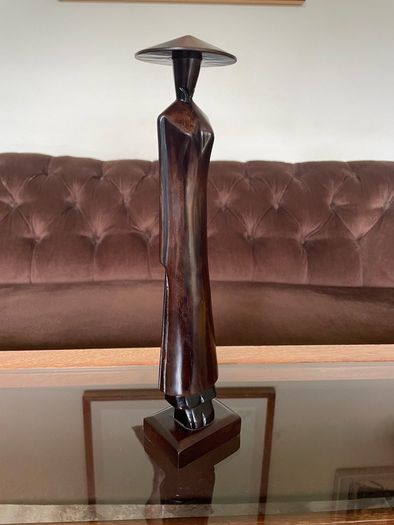
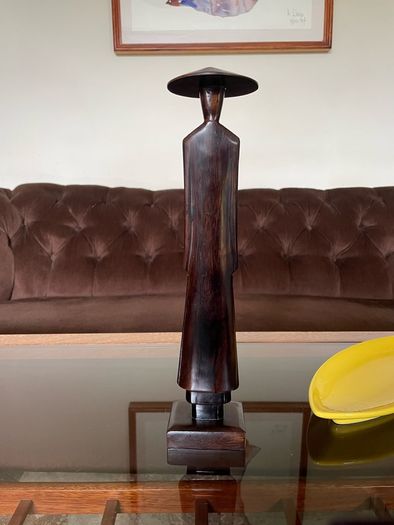
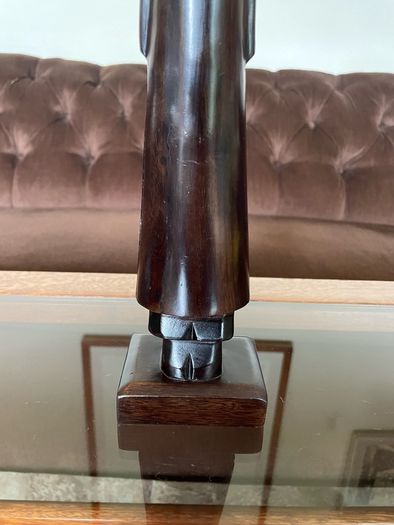
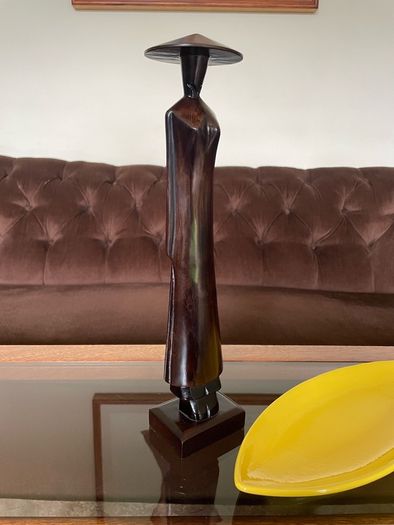
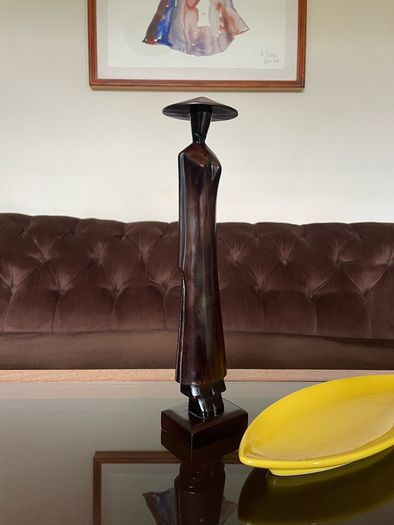
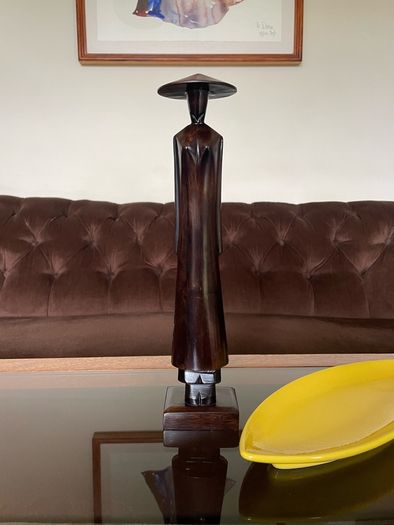
Vintage Silhouette Statue Vietnamese Woman in Ao Dai Dress
Description
Solid Hardwood well crafted and finished female wooden statue in traditional dress of a long tunic and a culottes trouser.Souvenir item crafted in dark redwood. Very striking!
34 cm tall x 7.5 cm x 7.5 cm
Vietnam’s national dress, the áo dài is one of the country’s most striking symbols of beauty. Over hundreds of years, the áo dài has evolved alongside Vietnam, going from regal to practical, humble to high fashion, and back again. The Vietnamese áo dài is appreciated by the young and old alike, and its elegant lines flatter both men and women.
The story of the áo dài starts in 1744, when Vietnam was divided into two territories, the Inner Land (Đàng Trong) and Outer Land (Đàng Ngoài.) To distinguish his people, Lord Nguyễn Phúc Khoát of Inner Land asked his subjects to wear a front-buttoned gown with trousers. This five-part dress (áo ngũ thân) was the inspiration for the modern áo dài. Royals and elites made their dresses from the finest silk, with intricate details and vibrant colours to represent rankings in court.
In the 1930s, the dress was simplified into two parts by Vietnamese artist Le Mur Nguyễn Cát Tường. The front flap was extended to reach the ankle, and the form became more fitted. As with many ‘westernized’ ideas, the style was only reluctantly received at first. However, after Le Mur designed an áo dài collection for Queen Nam Phương, wife of Vietnam's last Emperor Bảo Đại, urban women started to embrace and popularize the more contemporary style.
After the establishment of the Democratic Republic of Vietnam, Hồ Chí Minh penned an essay in 1947 noting that the áo dài was not fit for the fields or the factory, asking Vietnamese to adapt their attire to be more efficient for work. As a result, the áo dài became a dress saved for professional appearances and special occasions. Nowadays, across the country, female highschool students are required to wear the dress for at least one day a week. Girls in white áo dài riding their bicycles to school have inspired many Vietnamese songs, poems, and paintings. The áo dài is also worn by ladies of all ages whenever it’s time to make a good impression.
 Paypal
Asking Price: €28  No swaps
More Similar Ads

See more in our Ornaments & Figurines category available today