Antique WMF Lobster and Seaweed Silver Plated Trim Porcelain Round Serving Bowl 1920s
- Seller:
-
Sammler
Top Seller

- Feedback:
- Location:
- 326 more ads from this seller
- Entered/Renewed:
- 4 days ago
- Ad Views:
- 102


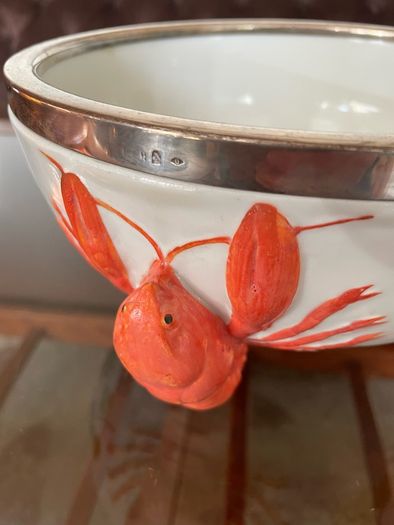
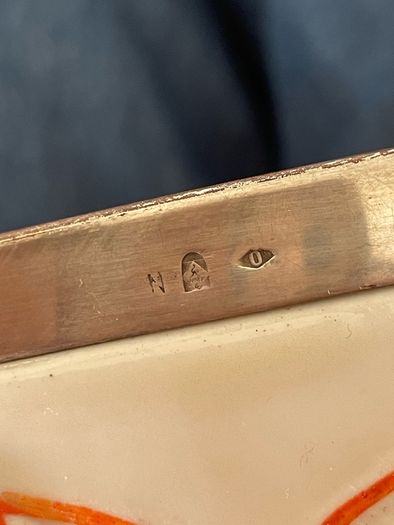
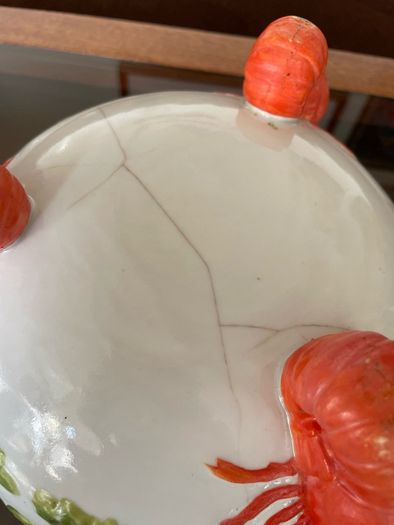
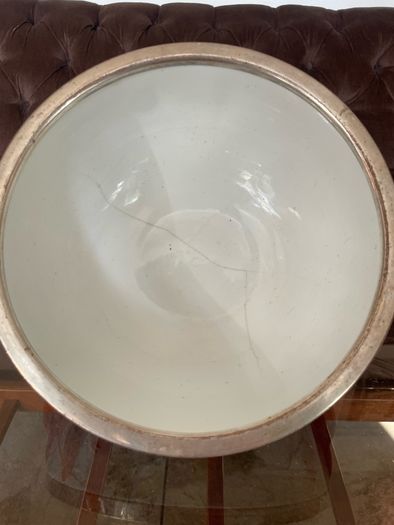
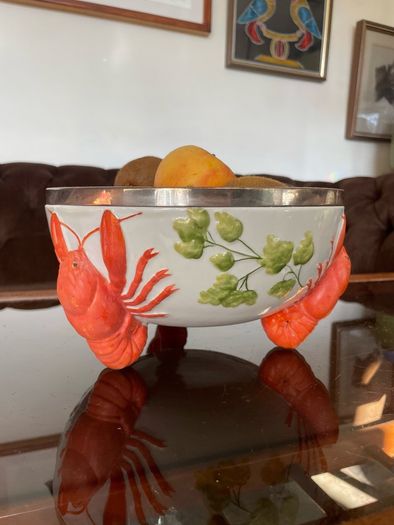
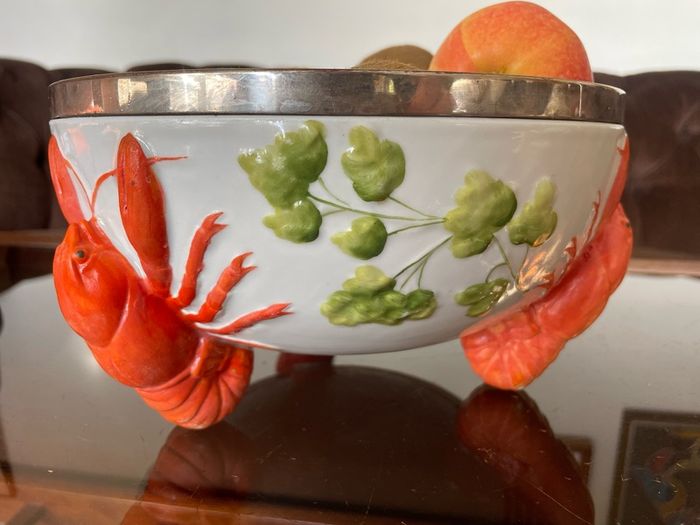
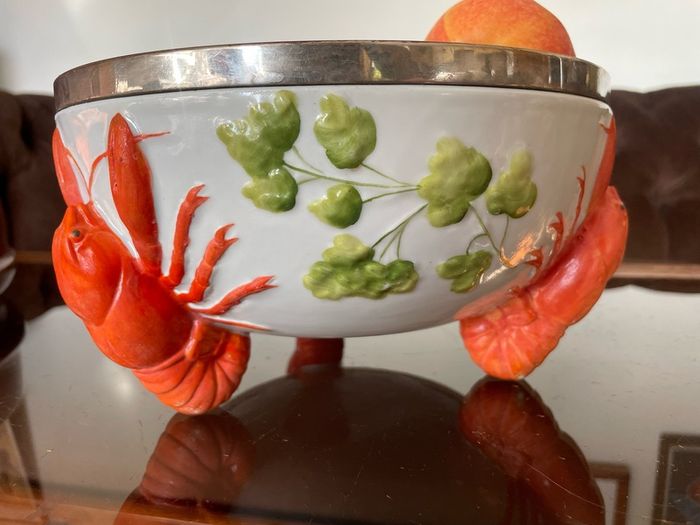
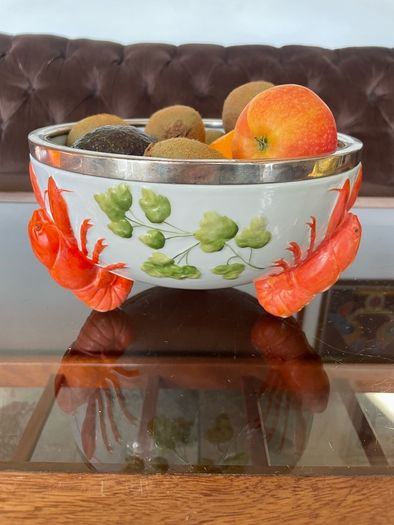
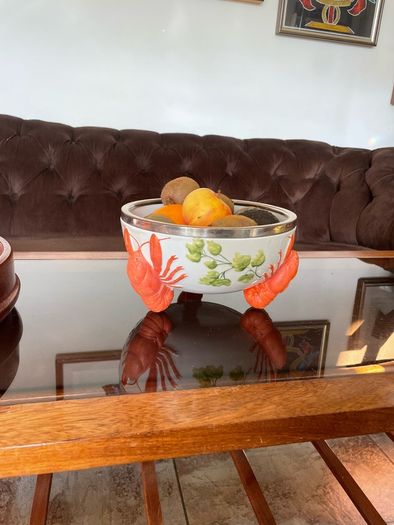
Antique WMF Lobster and Seaweed Silver Plated Trim Porcelain Round Serving Bowl 1920s
Description
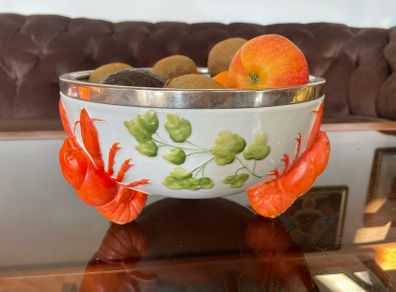
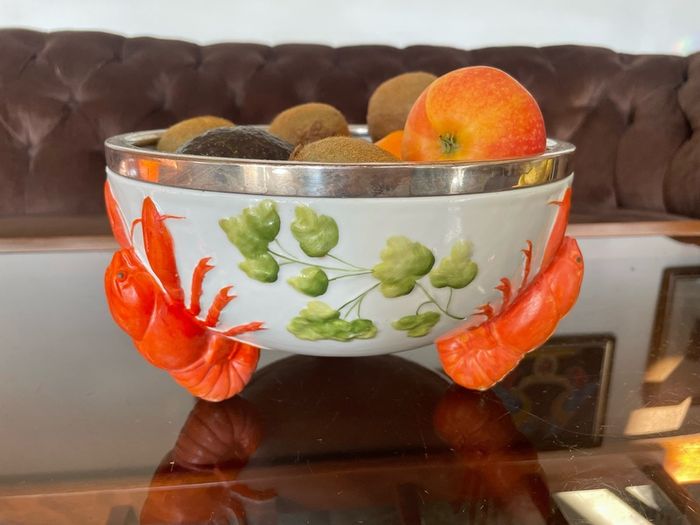
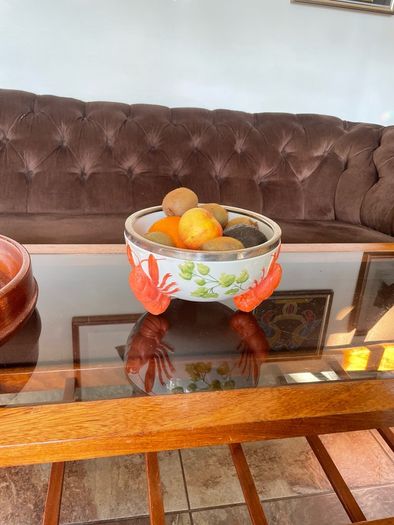
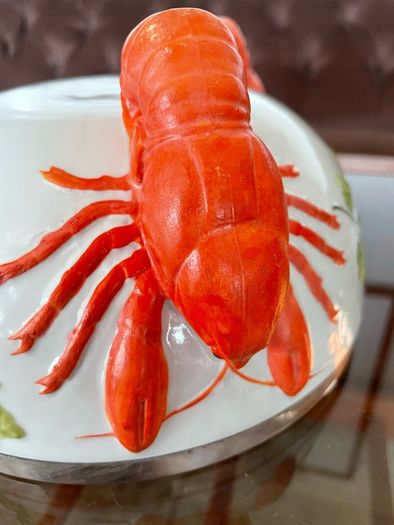
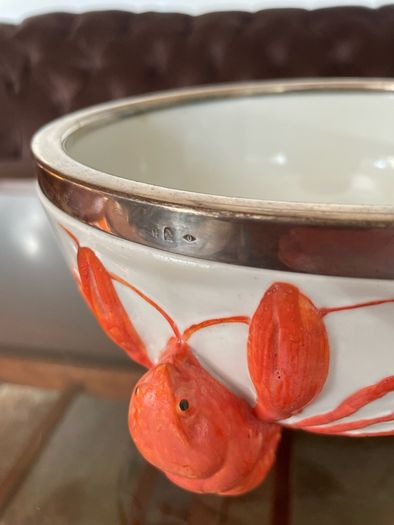
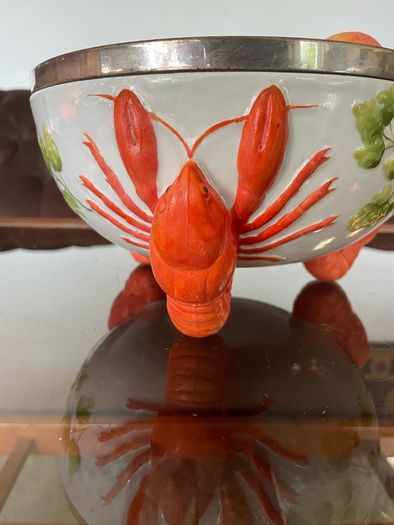
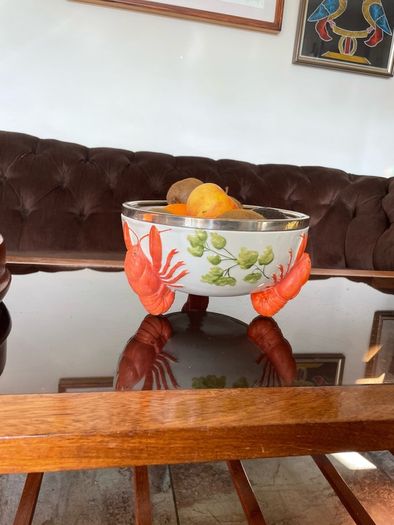
Outstanding antique WMF / Musterschutz lobster salad serving bowl, which dates back to the Art Nouveau (Jugendstil) period, circa 1890–1920.
These whimsical serving pieces were highly popular high-end table items.
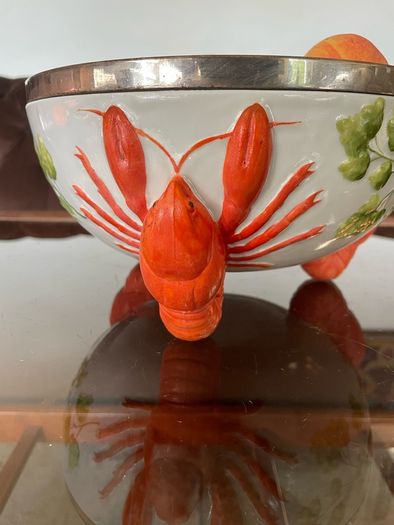
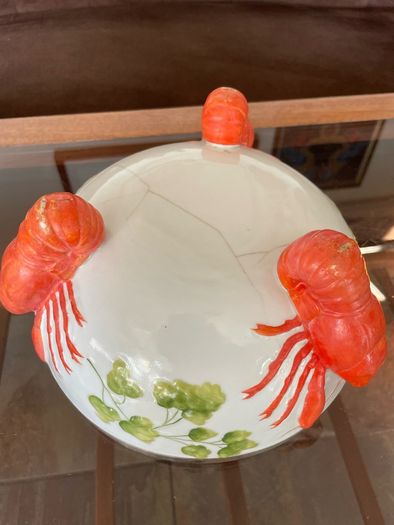
The entire porcelain body rests dynamically on three sculpted orange lobsters whose tails and claws curve up to support the frame.
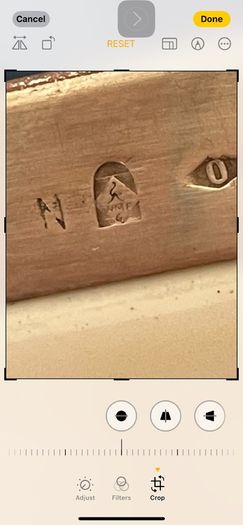
WMF Logo: The arched stamp featuring an ostrich inside a rhombus was used by the German metalware company Württembergische Metallwarenfabrik (commonly known as WMF) during the Art Nouveau (Jugendstil) and early 20th-century production periods!
In good sturdy condition. Some wear on the silver plate. Hairline cracks on the centre. Not new and do not seem to have changed over time. Very usable item after 100 years!!
Colour has dulled a little over time also to note.
The obsession with lobster and ceramic dates back to the 18th and 19th centuries, driven by the creature's transition from "poverty food" to a luxury delicacy. Potters crafted ceramic lobster ware to reflect coastal aesthetics, wealth, and the artistic surrealism made famous by icons like Salvador Dalí.
The fascination with this specific pairing stems from a few key historical and cultural shifts:
* The Transformation of Lobster: Before the mid-19th century, lobsters were so plentiful they were deemed "sea cockroaches" and used as fertilizer or food for prisoners and indentured servants. Once railroads allowed fresh lobster to be transported inland, clever marketing and chefs turned it into a luxury delicacy associated with high society and butter.
* Majolica and Coastal Decor: As coastal and "lake house" lifestyles became popular, ceramics shaped like lobsters, crabs, and fish became a staple. Potters from coastal European hubs—such as Caldas da Rainha in Portugal—mass-produced brightly colored Majolica lobster plates and platters.
* The Surrealist Art Movement: The obsession reached new heights in the 1930s when artists adopted the lobster as an iconic symbol of eroticism, pleasure, and the subconscious. Salvador Dalí notably created the famous Lobster Telephone in 1936, cementing the crustacean as a bizarre, high-art pop culture icon.
* Everyday Luxury: For the emerging middle class of the 1950s, collecting vintage ceramic "lobster ware" (like the widely popular Shawnee Pottery Kenwood lines) was a way to bring the extravagance of fine seaside dining into their own homes.
Today, this aesthetic remains a highly collectible part of vintage coastal and cottagecore decor.
 To be arranged PaypalTo be arranged
Asking Price: €55  No swaps
More Similar Ads







See more in our Other Antiques & Collectables category available today